
Lighthouse towers in the United States range from fewer than 50 steps to over 200. A multigenerational group with young children and older adults typically manages towers under 100 steps when intermediate landings appear every 15 to 20 steps. For mixed-age groups, the choice is straightforward: shorter towers with frequent platforms help everyone stay together, while taller structures may force you to split up or leave people behind. Plan the staircase as a physical route, not just part of the sightseeing. Always verify the exact stair count and landing frequency on the operator’s official visitor page before finalizing your family trip ideas. See also: planning a Fairport Harbor weekend including weather and parking.
Contents
- How many stairs can a multigenerational group climb together at a lighthouse?
- Do lighthouse operators enforce minimum height rules for children climbing the tower?
- How far apart are rest stops on a historic lighthouse spiral staircase?
- Why do shoe traction and step depth matter more than total height on spiral stairs?
- How do you run a pre-visit mobility check before splitting the family at the tower base?
Key takeaways
- Keepers have long treated that route as serious infrastructure.
- Many historic lighthouse operators enforce strict minimum height requirements for tower climbs, regardless of adult supervision.
- Check the distance between tower landings before you arrive.
- Spiral staircases in historic lighthouses have uneven step depths, steep pitches, and worn iron or wood treads.
- A pre-visit mobility check can keep the family from splitting up at the tower base.
How many stairs can a multigenerational group climb together at a lighthouse?
Keepers have long treated that route as serious infrastructure. In 1896, lighthouse keepers became members of the federal civil service, removing them from political appointment and standardizing the daily operational discipline required to maintain these towers safely (Clarke Historical Library). Apply the same care to your group’s logistics. Use this checklist to see whether a specific tower fits your youngest and oldest participants:
- Confirm the total stair count published by the lighthouse operator or historical society.
- Count the intermediate landings between the base and the lantern room.
- Divide the total steps by the number of landings to find the longest continuous climbing stretch.
- Compare that stretch against the stamina of your least mobile group member.
- Check whether the operator allows re-entry or turnaround on the stairs if someone tires out.
Tower preservation also shapes what you will encounter inside. Historic ironwork needs careful maintenance, and the National Park Service Museum Handbook provides guidance for museum collections preservation, documentation, access, and use across federally managed sites. That conservation framework helps explain why some original spiral stairs feel narrow or uneven underfoot compared with modern building codes.
Intermediate landings can matter more than the total step count. A 70-step tower with three evenly spaced platforms feels significantly easier than a 50-step tower with no breaks. Landings give children a safe place to pause without blocking descending traffic. They also let older adults catch their breath on a flat surface rather than a wedge-shaped tread. When researching family vacation ideas along the coast, prioritize towers that advertise multiple rest platforms in their visitor guidelines.
Operators of tall lighthouses manage climbers through strict pacing rules and mandatory rest stops. Groups move in controlled intervals to prevent bottlenecks on the spiral staircase. Turning around can be the harder part. Many historic towers lack sufficient width for two people to pass comfortably on the stairs themselves, so a descending climber must wait for an ascending group to reach the next platform. If a family member tires out halfway up a 200-step tower, retreating safely requires coordination with the volunteer docents stationed at landings.
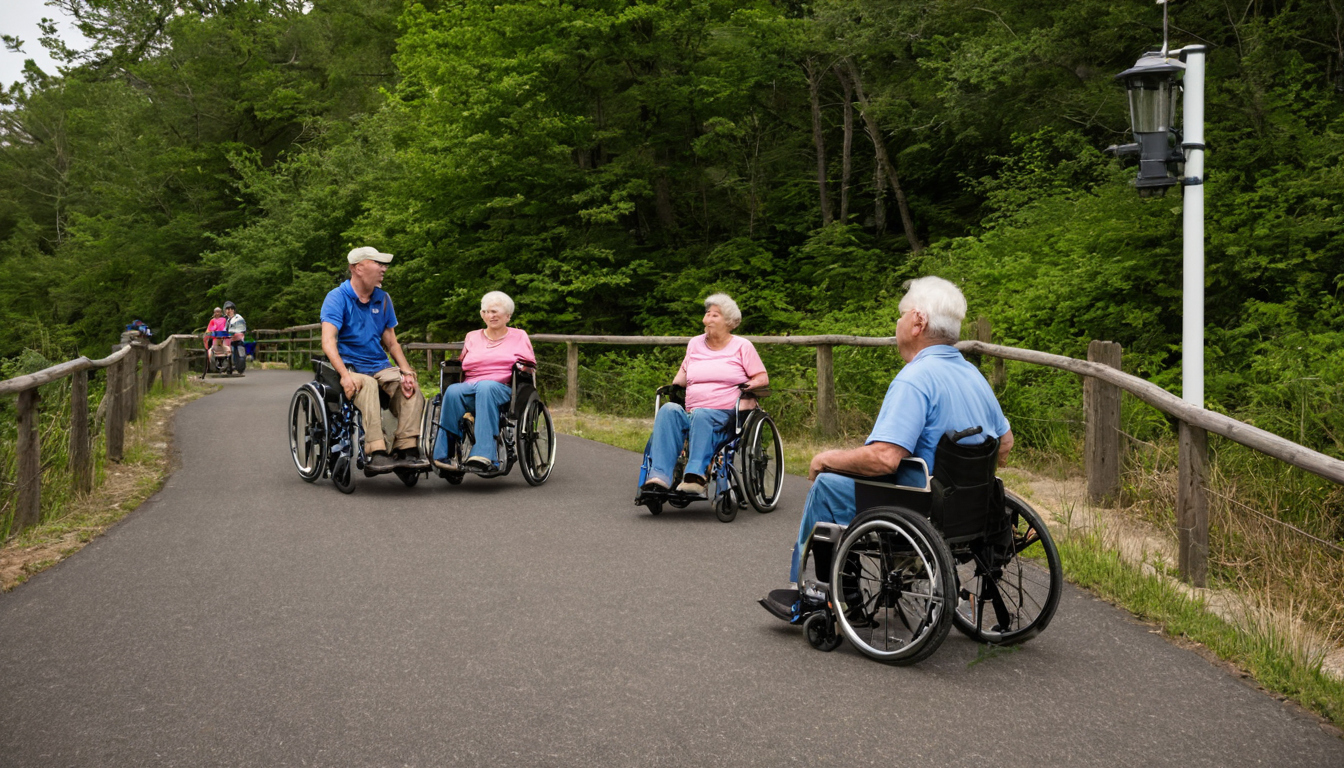
How many stairs can a multigenerational group climb together at a lighthouse.
Checking the rest of your trip logistics alongside mobility can prevent surprises at the ticket window. Reviewing details like planning a Fairport Harbor weekend including weather and parking helps your group arrive with enough time to attempt the climb without rushing. Rushed ascents increase slip risk on cast-iron treads. Once you confirm the stair count fits your group, check whether the tower also enforces physical size restrictions.
Do lighthouse operators enforce minimum height rules for children climbing the tower?
Many historic lighthouse operators enforce strict minimum height requirements for tower climbs, regardless of adult supervision. These rules exist because spiral staircase railings were built for nineteenth-century keepers, leaving gaps that pose fall risks for small children. Verify current season height minimums directly with the lighthouse or state park service before finalizing your itinerary.
The physical dimensions of a historic lighthouse tower reflect the workforce that maintained it. By the 1870s, the Lighthouse Board established that newly appointed keepers should be between the ages of eighteen and fifty, meaning staircases, landings, and railings were engineered for fully grown adults (Clarke Historical Library). Formal regulations defining a keeper’s daily routine began in 1852, when the first written rules stated a keeper could be immediately dismissed if discovered intoxicated or if the light was extinguished. Those early operational standards prioritized adult reliability over child access.
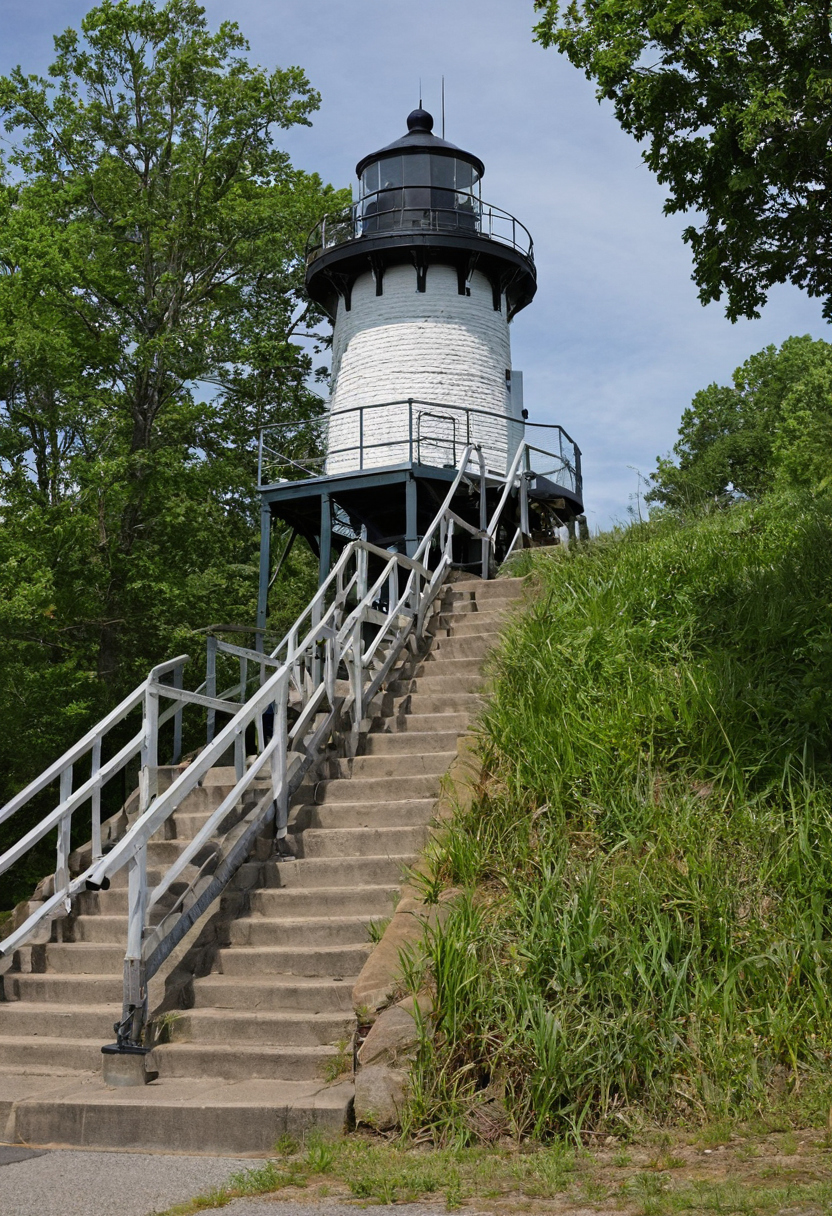
Do lighthouse operators enforce minimum height rules for children climbing the tower.
Tower interiors remain tightly constrained by their original design. By 1858, the third edition of the Lighthouse Board’s rules ran to eighty-seven printed pages and outlined 131 separate tasks keepers performed to use and maintain a Fresnel lens apparatus. Navigating those narrow iron stairs while performing precise maintenance required an adult frame. After the Lighthouse Service integrated into the U.S. Coast Guard in 1939, all newly employed individuals working with Great Lakes navigational aids became military personnel, reinforcing the expectation that only capable adults would ascend the tower.
Modern accessibility standards show how far historic towers deviate from current safety expectations. The 2010 ADA Standards set accessible dining and work surfaces at 28 to 34 inches above the finish floor, establishing baseline heights for public spaces (U.S. Department of Justice). Historic lighthouse guardrails rarely align with those modern measurements, which is why operators rely on minimum visitor height rather than retrofitting nineteenth-century ironwork.
Air quality inside a sealed stone or brick tower also affects young visitors. The U.S. Environmental Protection Agency identifies paints, varnishes, waxes, cleaning products, building materials, and furnishings as common indoor sources of volatile organic compounds (EPA). Preserved historic structures often contain legacy coatings that off-gas in confined vertical shafts, adding another reason operators restrict very small children from enclosed climbs.
Height policies vary by operator, but the reasoning behind them remains consistent across geographically distributed sites. Carrying a toddler who does not meet the height requirement is almost universally prohibited; the narrow spiral width prevents an adult from safely holding a child while gripping the handrail.
| Lighthouse | Typical Minimum Height | Carrying Allowed | Policy Source |
|---|---|---|---|
| Ponce de Leon Inlet (FL) | No strict height rule, steep climb advisory | Discouraged | Preservation Association visitor guidelines |
| Cape May (NJ) | 42 inches | No | State park safety policy |
| Split Rock (MN) | Child must climb independently | No | Minnesota Historical Society |
| Big Sable Point (MI) | 42 inches | No | State park operations |
| Fairport Harbor West Breakwater (OH) | Independent climbing ability required | No | Local historical society briefings |
These restrictions matter when you evaluate family travel ideas for a mixed-age group. A child who meets the height threshold still needs the stamina for the full ascent, making the distance between rest platforms the next critical variable. Knowing how far apart rest stops sit on a historic lighthouse spiral staircase helps you judge whether a qualifying child can finish the climb safely.
How far apart are rest stops on a historic lighthouse spiral staircase?
Check the distance between tower landings before you arrive. Historic lighthouses rarely have uniform landing intervals; some offer a platform every 15 steps, while others require 30 or more continuous steps between resting points. For older adults or toddlers, a maximum gap of 20 steps without a landing dictates which towers remain viable for your group.
Landings in nineteenth-century cast-iron towers fall short of modern accessibility benchmarks. The 2010 ADA Standards specify a 30 by 48 inch clear floor space for wheelchair positioning. A typical historic lighthouse landing measures closer to 24 by 36 inches. That footprint lets one adult and one child pause together, but leaves no room for a stroller, a bench, or a seated rest. Tower volunteers direct climbers to keep the passing lane open even while catching their breath.
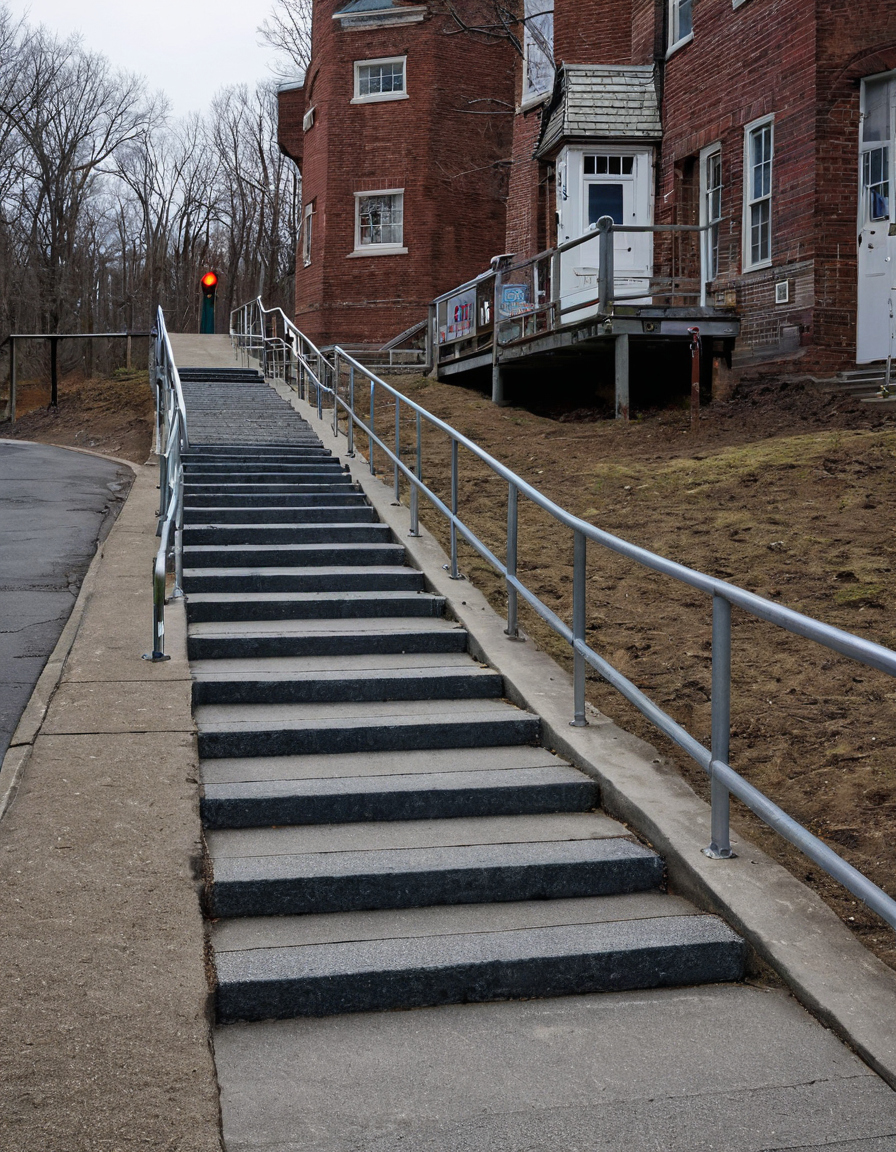
How far apart are rest stops on a historic lighthouse spiral staircase.
Tower guides manage the limited space through specific protocols:
Planning a route that includes choosing between a lighthouse tour, harbor cruise, or waterfront walk gives your group a low-exertion alternative when the landing gaps exceed what your youngest or oldest members can handle comfortably. Once you confirm the landing frequency fits your group, check footwear and step geometry.
Why do shoe traction and step depth matter more than total height on spiral stairs?
Spiral staircases in historic lighthouses have uneven step depths, steep pitches, and worn iron or wood treads. Total height matters less than the shape of each step. Closed-toe shoes with rubber soles are standard safety requirements. Operators frequently deny entry to visitors wearing flip-flops or smooth-soled shoes due to slip hazards on curved, narrow treads.
Cast-iron treads on nineteenth-century towers wear smooth over decades of foot traffic. The outer edge of a spiral step offers a deeper run than the inner edge near the central column. A child stepping near the center encounters a narrow ledge rather than a flat platform. Wooden stairs absorb moisture differently than iron, so grip can vary even within a single flight.
Rubber soles provide consistent friction against both painted iron and sealed wood. Hard leather soles slide on polished metal. Open-toed sandals expose feet to pinching between the tread and the riser above. Historical society volunteers brief groups on footwear before every climb because replacing a visitor’s shoes at the base is not an option.
The single outer rail often breaks where structural supports cross the stairwell. Visitors must release their grip, step past the obstruction, and reach for the next segment. Older adults who rely on constant bilateral support face a balance challenge unrelated to total stair count. Children shorter than the rail height cannot reach it comfortably while navigating the curve.
Available handholds affect whether your group can ascend safely together. Knowing the exact rail configuration changes how you assign positions within the climbing order. Once you have checked footwear and handholds, verify each person’s readiness before the first step.
How do you run a pre-visit mobility check before splitting the family at the tower base?
A pre-visit mobility check can keep the family from splitting up at the tower base. Before driving to the site, compare your youngest child’s height against the operator’s posted minimum, confirm older adults can manage the longest stair gap without a landing, and ensure everyone has approved footwear. If the group cannot meet all criteria, choose ground-level museum access or waterfront walks instead of attempting the climb.
Follow this mobility check in order so you do not overlook a factor while packing or traveling:
Run this checklist the night before so the group arrives with a plan rather than discovering physical limits at the ticket window. Coordinating these details early helps the outing run smoothly, much like planning a Fairport Harbor weekend including weather and parking.
Treat the climb as optional rather than mandatory. Ground-level exhibits deliver the maritime history without the physical strain of a vertical ascent. For members opting out entirely, choosing between a lighthouse tour, harbor cruise, or waterfront walk provides low-exertion alternatives that keep the group together geographically while respecting individual limits. Our guide to separating tower-climb rules from museum access details how to build this parallel itinerary so nobody feels left behind.
Moisture inside a confined masonry shaft behaves differently than in a ventilated building. The U.S. Environmental Protection Agency notes that condensation and damp spots require prompt attention to prevent mold growth (EPA mold and moisture guidance). Historic towers rarely have modern climate control to fix wet spots promptly or reduce indoor humidity quickly after a storm. Preservation coatings applied to interior ironwork and wood elements can release volatile organic compounds, and the EPA recommends increasing ventilation when such products emit compounds indoors (EPA indoor air quality recommendations). Narrow lighthouse windows limit natural airflow, so humid days raise both breathing effort and slip risk.
Schedule climbs for cooler morning hours during summer months. Bring water even for towers under one hundred steps. Cancel the ascent if heavy rain preceded your arrival and the operator has not yet dried the treads. Match the climb to your group’s actual capacity on that specific day to keep the outing safe. Decide at the base based on real conditions, not on the fact that you have already made the drive.
For more on this topic, see other guides on this site.