
At the ticket desk, a family with children, grandparents, and one reluctant climber faces a deceptively simple question: does admission mean everyone may enter the tower? Often, it does not. Buying before checking height, supervision, carrying, stair, and weather rules can leave the group with unusable tickets or a child who has no assigned adult below.
Tower-climb admission and lighthouse museum access are separate permissions
At climbable U.S. lighthouses, site admission does not guarantee tower admission. Operators may apply separate child, supervision, mobility, carrying, ticketing, and weather rules. A child, grandparent, or reluctant climber may enter the attraction yet remain below while eligible relatives climb.
Who may enter the lighthouse site but may not climb the tower?
St. Augustine Lighthouse excludes children under 44 inches from its 165-foot tower. Taller children must climb under their own power, so a carrier does not create eligibility. The tower has no elevator. High winds, nearby thunder or lightning, and a wet observation deck can suspend climbing while other areas remain available.
Cape May Lighthouse publishes public-climb information, but its visitor page does not establish every child-supervision, footwear, carrier, bag, or reentry rule needed for a family decision. A child admission category must not be interpreted as proof that every ticketed child may climb.
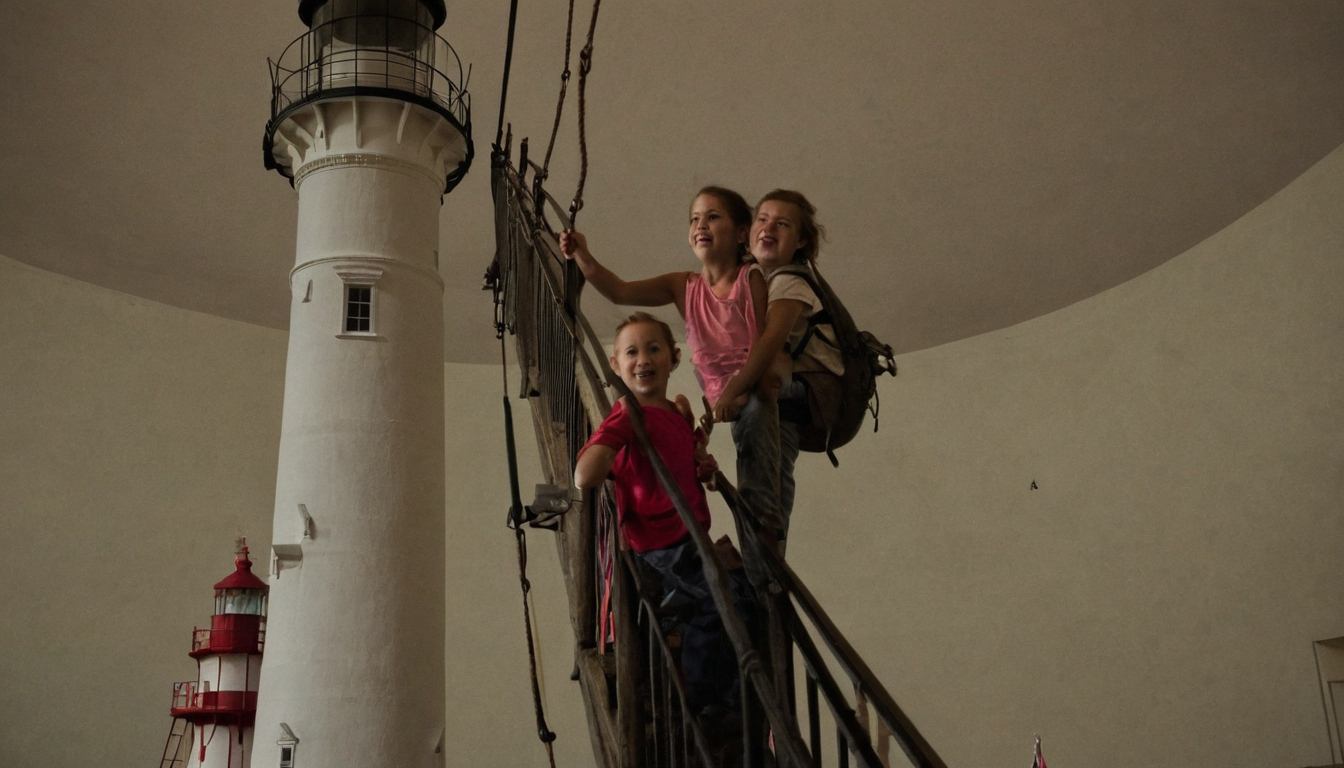
Tower-climb admission and lighthouse museum access are separate permissions shown with practical context cues.
Does one ticket cover the tower, museum, keeper’s dwelling, and grounds?
| Site | Tower permission | Museum and grounds | Ticket format and evidence |
|---|---|---|---|
| St. Augustine Lighthouse | Ordinary climb included with general admission, subject to eligibility and weather | Keepers’ House and other maritime attractions included | Published by the operator; special experiences have separate conditions |
| Cape May Lighthouse | Daytime public climb offered; severe weather may close the tower | Interpretive panels are available on the grounds and at the base | Published by Cape May MAC; combination tickets and nighttime climbs are separate products |
| Pensacola Lighthouse | Unconfirmed | Unconfirmed | Operator confirmation required |
| St. Simons Lighthouse | Unconfirmed | Unconfirmed | Operator confirmation required |
| Key West Lighthouse | Unconfirmed | Unconfirmed | Operator confirmation required |
St. Augustine’s one-hour Lighthouse Keepers’ Tour is followed by general-admission access, including the working-lighthouse climb. Its limited-capacity Sunset Moonrise experience may sell out well ahead and requires identification for the complimentary champagne. These examples show why ordinary admission and special lighthouse tours need separate labels.
Which lighthouse tours have the clearest rules for multigenerational families?
St. Augustine and Cape May provide the clearest evidence-supported climb information in this comparison. Pensacola, St. Simons, and Key West require current operator confirmation for every unsupported field. An unpublished rule means unconfirmed, not unrestricted.
The comparison matrix should use identical fields for every lighthouse
| Site | Public climb status | Steps and stair form | Child eligibility and supervision | Footwear, carriers, and bags | Ticket method | Weather closure | Below-tower experience |
|---|---|---|---|---|---|---|---|
| St. Augustine, Florida | Public climb. Published. | 219 steps and eight landings. Published. | Minimum 44 inches; eligible children climb independently. Published. | Carrying children prohibited; remaining fields unconfirmed. | General admission includes climbing. Published. | Wind, thunder, lightning, or a wet deck can close the tower. Published. | Accessible Maritime Education Center and 1936 World War II Garage. Published. |
| Cape May, New Jersey | Public climb. Published. | 199-step original cast-iron spiral stairway. Published. | Unconfirmed. | Regular-climb rules unconfirmed. | Standard admission; special events are separate. Published. | Lightning or severe weather can close the tower. Published. | Grounds interpretation and accessible Oil House orientation center. Published. |
| Pensacola, Florida | Operator confirmation required. | Operator confirmation required. | Operator confirmation required. | Operator confirmation required. | Operator confirmation required. | Operator confirmation required. | Operator confirmation required. |
| St. Simons, Georgia | Operator confirmation required. | Operator confirmation required. | Operator confirmation required. | Operator confirmation required. | Operator confirmation required. | Operator confirmation required. | Operator confirmation required. |
| Key West, Florida | Operator confirmation required. | Operator confirmation required. | Operator confirmation required. | Operator confirmation required. | Operator confirmation required. | Operator confirmation required. | Operator confirmation required. |
An unpublished lighthouse rule should be labeled unconfirmed, not assumed
- Record the operating season and exact verification date for every site.
- Ask about age, adult supervision, shoes, carriers, bags, reservations, late arrival, and refunds.
- Label telephone or email answers “Staff-confirmed,” with the date and responding department.
- Keep unanswered fields “Unconfirmed,” never “No restriction.”
Special events need separate entries. St. Augustine’s Dark of the Moon climb is weather dependent. Cape May’s limited fireworks climb has event-specific reservations, comfortable-shoe guidance, and a refund provision if the fireworks are cancelled. Ordinary climb difficulty still requires more than an event label or stair count.
Stair count alone does not show how difficult a lighthouse climb will be
Stair count cannot predict whether a climb suits a child or grandparent. Stair form, landings, visibility, two-way traffic, narrow exits, outdoor galleries, capacity, and weather exposure all change the physical and emotional demands.
- Count the complete route: confirm whether the total includes entrance steps, tower stairs, and gallery access.
- Inspect the design: open risers, tight spirals, ladders, hatches, and low-clearance doorways create different balance demands.
- Check resting and passing options: St. Augustine has 219 steps to the observation deck and eight landings. Visitors can see through the stair treads, and railings run along both sides.
- Distinguish day and night conditions: Cape May’s Full Moon Climbs use the same 199-step cast-iron spiral staircase and reach nearly 156 feet above the surrounding water, but darkness changes the experience.
What shoes, bags, and child-carrying equipment are permitted on spiral stairs?
Choose secure, well-fitting shoes and plan to keep both hands available. Leave loose bottles, dangling cameras, and bulky bags behind when possible. These are practical defaults, not universal rules. Confirm each operator’s wording for sandals, open heels, backpacks, lockers, and stroller parking.
St. Augustine prohibits tower access for children under 44 inches. Taller children must climb under their own power, and carrying children or pets in the tower is prohibited.
How do landings, visitor capacity, and two-way traffic affect the climb?
Ask whether climbers share one staircase in both directions, where passing is allowed, how groups are released, and whether the estimated duration includes queuing and time at the top. A visitor who may need frequent pauses should ask staff where turning around is possible.
If those conditions do not suit the group, choose between a lighthouse tour and a lower-exertion waterfront outing. Otherwise, build a confirmed below-tower plan for anyone who does not climb.
Ground-level exhibits can preserve the family lighthouse trip for non-climbers
A non-climber can share a worthwhile visit when confirmed exhibits, keeper spaces, grounds, or programs exist outside the tower. Attraction availability and step-free accessibility must still be checked separately.
What can a non-climber do while relatives are in the tower?
At St. Augustine, admission includes the 1874 tower and 360-degree views for eligible climbers, plus the Keepers’ House, Maritime Education Center, World War II buildings, Heritage Boatworks, and Maritime Hammock Nature Area. Non-climbing children can use the pirate-ship playground, knots-and-rigging interactive, miniature lighthouse, and stationary play boats. Hands-on programs, nature trails, ship models, conservation work, and keeper-history interpretation create a genuine second itinerary.
At Cape May, non-climbers can visit the Oil House’s Visitors’ Orientation Center and Museum Shop and read interpretive panels on the grounds and at the lighthouse base. Views of Delaware Bay, the Atlantic, Cape May Point State Park, and Cape May Point Borough belong to visitors who complete the 1859 tower climb, so the below-tower plan should not promise the same experience.
Ground-level access does not automatically mean step-free access
St. Augustine confirms accessible parking, a ramp to the Visitors’ Center and Gift Shop, wheelchair-accessible public restrooms, and ramp access to the main floor only of the Keepers’ House. The main floor includes keeper-life interpretation and an archaeology video. The Maritime Education Center and 1936 World War II Garage are described as fully accessible, but the historic tower has no elevator.
Cape May identifies the Oil House as fully accessible, but that statement does not cover the tower. For Pensacola, St. Simons, and Key West, route surfaces, thresholds, seating, shade, restrooms, and museum admission remain unconfirmed.
Published accessibility language should describe the actual route and spaces rather than rely on a general label. The 2010 ADA Standards, for example, specify a 30-by-48-inch clear floor space and place accessible work surfaces between 28 and 34 inches high. Those design figures do not prove that a particular historic lighthouse route is step-free. Once both groups have workable routes, the reunion must be scheduled.
A split-party lighthouse itinerary should schedule the reunion before the climb
A family lighthouse trip works best when everyone chooses a reunion point and plans around the climbers’ entry time, not an assumed visit length. Never assume a child or dependent adult may wait unattended.
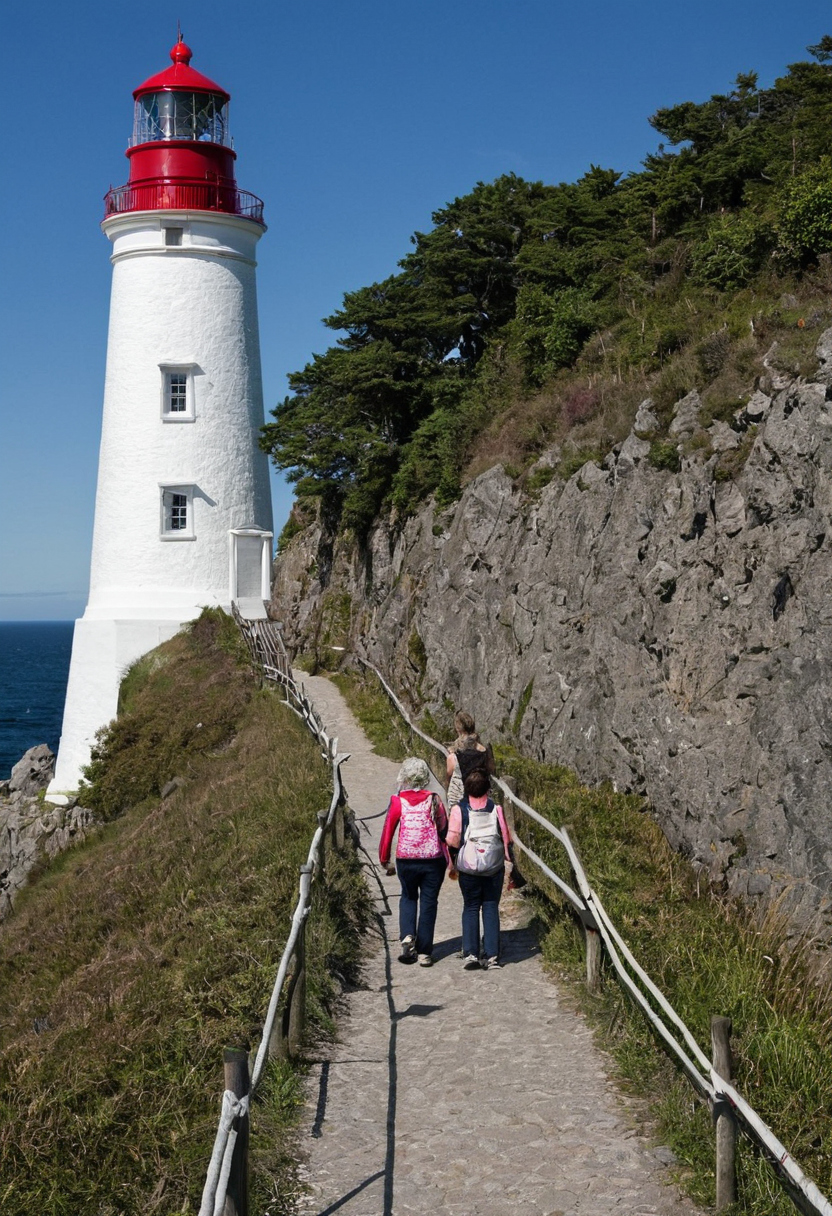
A split-party lighthouse itinerary should schedule the reunion before the climb shown with relevant destination, access, and visitor conditions.
The supervising adult should be assigned before tower tickets are purchased
- Assign the non-climbing adult responsible for each child or dependent person.
- Confirm eligibility, arrival guidance, ticket remedies, and whether both groups share an admission line.
- Select a permitted meeting point near the tower exit, visitor center, or staffed museum desk.
- Set the reunion after the expected climb, allowing time for check-in, queues, controlled capacity, and the observation deck.
Special programs may impose stricter conditions. St. Augustine’s weather-dependent, one-hour Twilight at the Top experience requires participating children to be at least 44 inches tall and accompanied by an adult.
Weather closures require a shared backup activity and meeting point
Choose a museum exhibit or sheltered visitor area as the backup, then confirm that it remains open when the tower closes. Cape May may suspend climbing for lightning or severe weather. Its Stairway to the Stars rules permit binoculars only when securely worn, illustrating why families must check the exact program rather than applying daytime assumptions.
Current operator confirmation is the final lighthouse access check
Lighthouse access can change with staffing, restoration, heat, wind, lightning, or special programming. Date every official-page check and every direct response, and leave omitted rules marked unconfirmed.
What should families verify 48 hours before a lighthouse visit?
- Opening dates, final climb time, ticket availability, reservations, and late-arrival rules
- Construction notices, forecast restrictions, and closure alerts
- Footwear, bags, carriers, height limits, and adult supervision
- Museum exhibits, restrooms, parking, seating, and accessible routes
Repeat the closure check on arrival day. Fairport visitors can also plan for lighthouse hours, weather, parking, and a backup route, though those logistics are Fairport-specific. Purchase tower tickets only after current rules support the group’s supervision and reunion plan.
Frequently asked questions about lighthouse access
How long does it take to climb a lighthouse when queuing, stairs, and time at the top are included?
There is no reliable universal duration. Ask whether the operator’s estimate includes ticket check-in, controlled entry, stair traffic, rest stops, and observation-deck time. Schedule the reunion with additional margin.
Is a lighthouse museum worth visiting if a child or grandparent cannot climb the tower?
Yes, when the site confirms keeper-history exhibits, films, workshops, children’s activities, accessible visitor spaces, or grounds interpretation. Check that those attractions will be open during the climb.
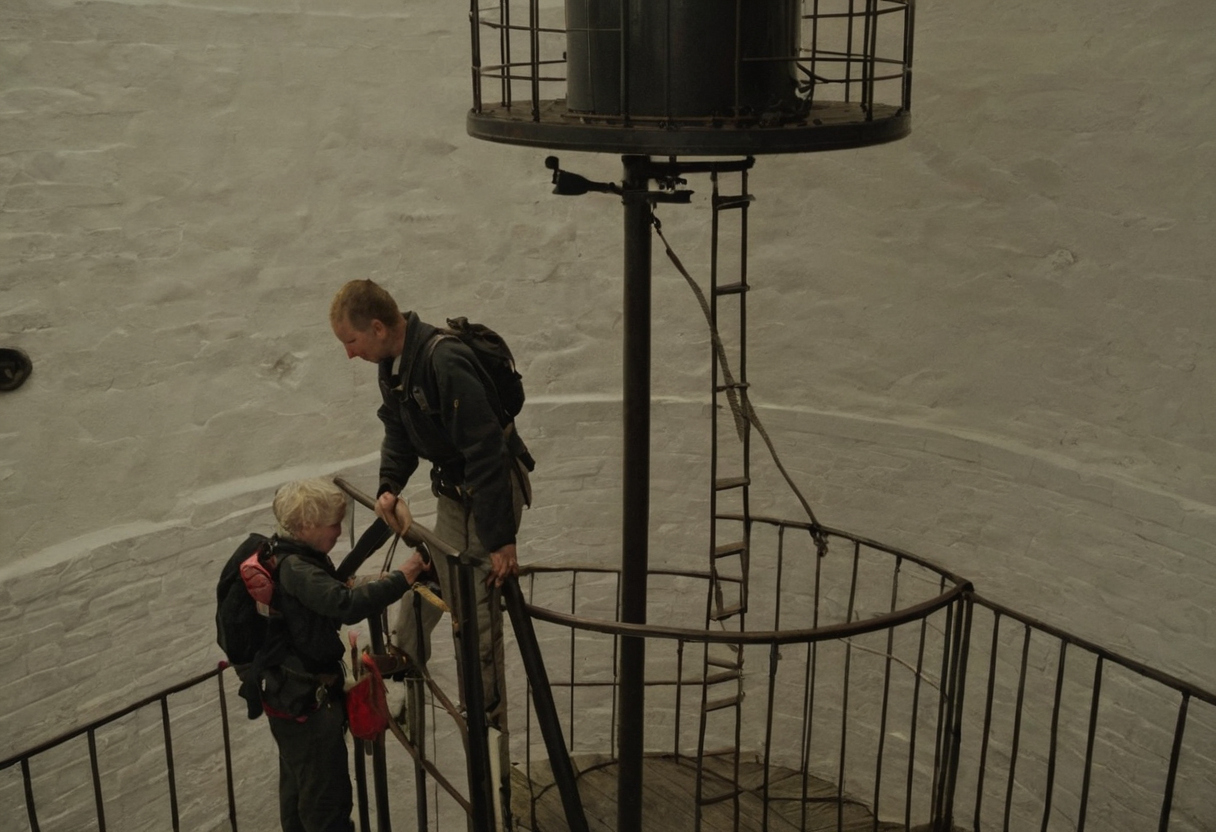
Frequently asked questions about lighthouse access shown as an editorial planning reference.
Can one adult climb while another adult stays below with children?
Usually that arrangement depends on site admission and supervision rules. Assign the supervising adult before buying tickets and confirm that no operator policy requires a different adult-to-child arrangement.
What shoes and child carriers are usually prohibited on lighthouse stairs?
Rules vary. Secure shoes are the safest planning choice, but families must ask specifically about open heels, sandals, framed carriers, front carriers, backpacks, and loose objects. St. Augustine prohibits carrying children in its tower.