
Arriving after final admission can turn a carefully planned Fairport Harbor day into a search for parking and an improvised walk beside worsening water. The safer approach is to build the itinerary around one fixed-hour attraction, verify every changing detail, and prepare a replacement route before leaving home.
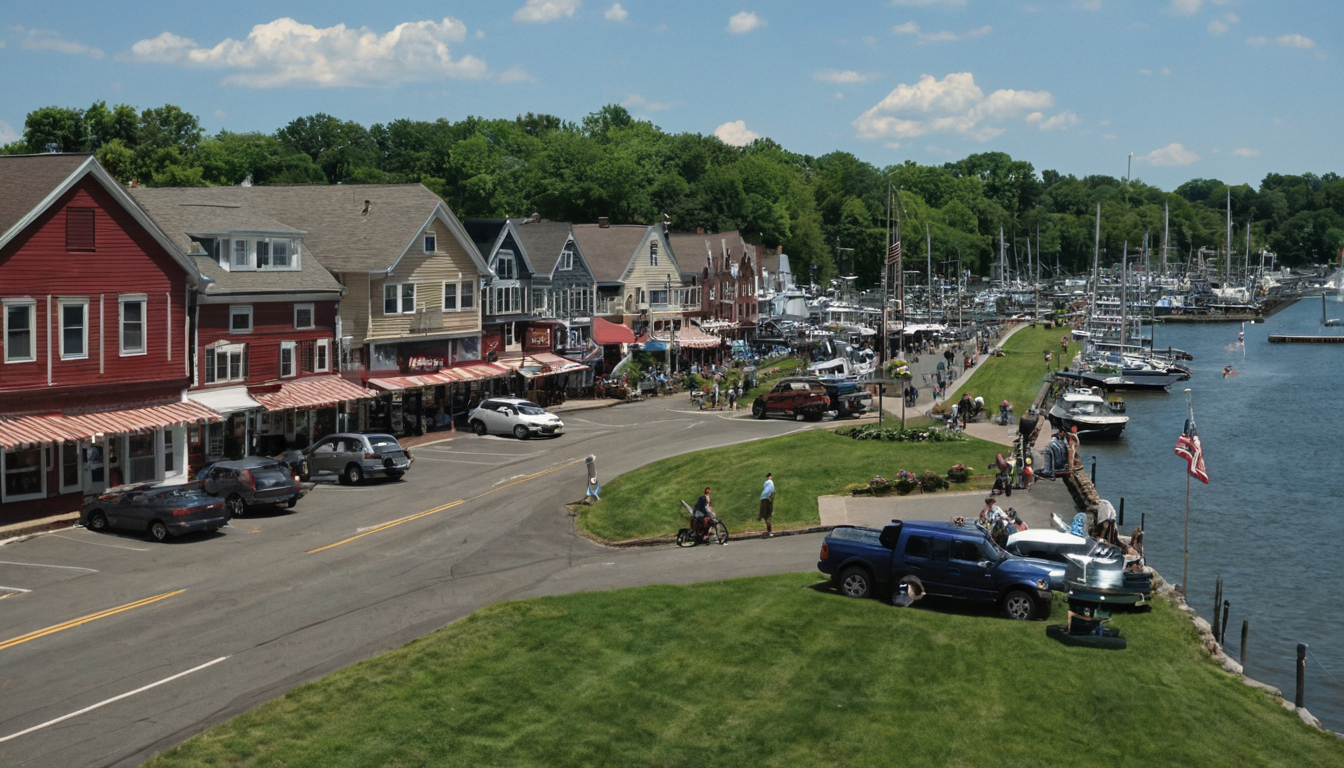
Planning a Fairport Harbor Weekend: Hours, Weather, Parking, and a Backup Route shown with practical context cues.
What should visitors verify before leaving for Fairport Harbor this weekend?
A workable Fairport Harbor weekend begins with a fresh check of attraction hours, final admission, tour availability, waterfront conditions, parking restrictions, and restroom access. These details can change independently, so confirmation from the previous weekend is not enough.
Planning guidance last checked: October 24, 2025. Live schedules are not reproduced here. Confirm the details below for the specific Saturday or Sunday you plan to visit.
Complete the night-before check
Treat the itinerary like a chain with one fixed link. Lighthouse or museum admission has operating limits, while lunch and an outdoor walk usually provide more flexibility. Verify the fixed link first.
- Confirm the museum calendar. Check the Fairport Harbor Historical Society for posted hours, final admission, event notices, fees, and contact details for the Fairport Harbor Marine Museum & Lighthouse at 129 Second St., Fairport Harbor, Ohio 44077.
- Ask how entry works. Determine whether museum admission or tower access requires a reservation, has limited capacity, or operates first-come, first-served. If advance booking is available, confirm cancellation and late-arrival terms.
- Verify what admission includes. The museum occupies a small first-floor space in the former keeper’s house, but museum entry should not be assumed to include the tower. Ask separately about tower availability and mobility restrictions.
- Check each park separately. Confirm current hours, parking, restrooms, beach services, accessibility, and seasonal notices for Fairport Harbor Lakefront Park. A background description of Headlands Beach State Park identifies it as a public beach administered by the Ohio Department of Natural Resources, but that description does not establish current hours, swimming conditions, or closures. Verify those details through the responsible operator.
- Read the timed forecast. Compare planned attraction hours with forecast periods for rain, thunderstorms, shoreline wind, heat, cold, fog, or flooding. A dry morning followed by afternoon storms requires a different schedule from steady rain.
The Historical Society lists (440) 354-4825 and [email protected] for visitor inquiries. Contact the organization when its calendar does not clearly answer questions about final entry, reservations, special events, exhibits, or same-day access.
Repeat the check before departure
Recheck conditions immediately before driving, even if Plan A looked sound the previous evening. Staff availability, marine weather, road access, and beach advisories can change overnight.
- Review the museum’s official website and designated update channels for delayed opening, canceled tours, or tower restrictions.
- Check current National Weather Service alerts affecting Lake County, Ohio.
- Read the Lake Erie nearshore forecast covering Fairport Harbor instead of relying only on an inland weather app.
- Review current park, beach, swimming, road, and parking advisories from the responsible agencies.
- Confirm which restrooms are open and whether parking and pedestrian routes suit children, older adults, and visitors with limited mobility.
Once the fixed-hour stop survives these checks, protect it before lunch and place flexible waterfront activities later.
A timed Fairport Harbor Plan A should put fixed-hour attractions before flexible waterfront stops
Anchor a one-day Fairport Harbor itinerary to the lighthouse museum or another fixed-hour attraction. Place beaches, overlooks, and waterfront walks in adjustable blocks that can move with weather, meal waits, daylight, and the group’s pace.
Protect the morning attraction
The following sequence is illustrative, not a statement of current opening times. Use it only after confirming that the selected date is an operating day.
- Opening minus 15 to 30 minutes: arrive, park, walk to the entrance, and complete ticketing or check-in.
- Opening through the next 60 to 90 minutes: allow time for the museum, grounds, photographs, and any permitted tower access.
- Before lunch: finish the attraction that has a closing time or final-admission cutoff.
The Fairport Harbor Historical Society identifies the original lighthouse as an 1825 structure and the replacement tower and keeper’s house as 1871 buildings. The replacement tower has a 69-step spiral staircase leading to its observation platform. Museum access does not prove that every visitor can or may climb the tower. Confirm capacity, tickets, footwear guidance, health restrictions, tower availability, and late-arrival rules directly.
Combine lunch with flexible afternoon time
Place lunch after the fixed admission window. An adjustable 60- to 90-minute meal block allows for weekend waits, but confirm kitchen hours rather than relying on a restaurant’s general closing time. Follow lunch with a 45- to 90-minute waterfront walk or a longer beach stop based on conditions and walking pace.
Visitors still choosing the outing format can compare a lighthouse tour, harbor cruise, and waterfront walk. Confirm navigation estimates, pedestrian routes, picnic rules, and parking before assigning transfer times.
Set an outdoor turnaround time
Calculate the final stop from verified sunset, twilight, park-closing, and gate information for the actual date. Leave extra daylight for families, slower walkers, and unfamiliar paths. End exposed activity if thunder, strong wind, hazardous waves, fog, or poor visibility develops.
The schedule now depends on a practical constraint: where to park and what happens after everyone leaves the vehicle.
Where should Fairport Harbor visitors park, and what access limits should they expect?
Plan parking by destination. Confirm the correct entrance, fees, time limits, accessible spaces, seasonal restrictions, walking surfaces, and restroom availability rather than assuming one waterfront lot serves the entire itinerary.
Compare parking rules and lawful fallbacks
Use this table as a departure checklist, not as a statement of current fees or availability.
| Destination | Official lot to verify | Fee or payment check | Walking surface or access issue | Lawful fallback |
|---|---|---|---|---|
| Fairport Harbor Marine Museum & Lighthouse | Museum directions for 129 Second St.; confirm the designated entrance | Ask about fees, time limits, events, and reentry | Confirm distance to the entrance and whether the route has curbs, slopes, or steps | Use only museum-approved or posted public parking |
| Fairport Harbor Lakefront Park | Park-operator lot and current entrance | Check seasonal fees, payment method, enforcement hours, and vehicle restrictions | Confirm routes to restrooms, seating, beach areas, and waterfront paths | Follow official overflow instructions or choose another stop |
| Downtown or another waterfront stop | Village-posted public lot or legal street space | Read signs for limits, permits, and enforcement periods | Check curb cuts, crossings, grade, surface, and walking distance | Move to another posted public area, never an unmarked private lot |
Check every part of the access route
An accessible parking space does not establish step-free access to a historic interior, tower, beach route, or restroom. Ask each operator about curb cuts, entrance thresholds, seating, restroom operating periods, beach-access equipment, and accommodation procedures.
The U.S. Department of Justice design standards include a 30-by-48-inch clear floor space and 28-to-34-inch accessible work-surface heights. Those design benchmarks are not site-specific confirmation. After verifying the land route, determine whether Lake Erie conditions still make the stop practical.
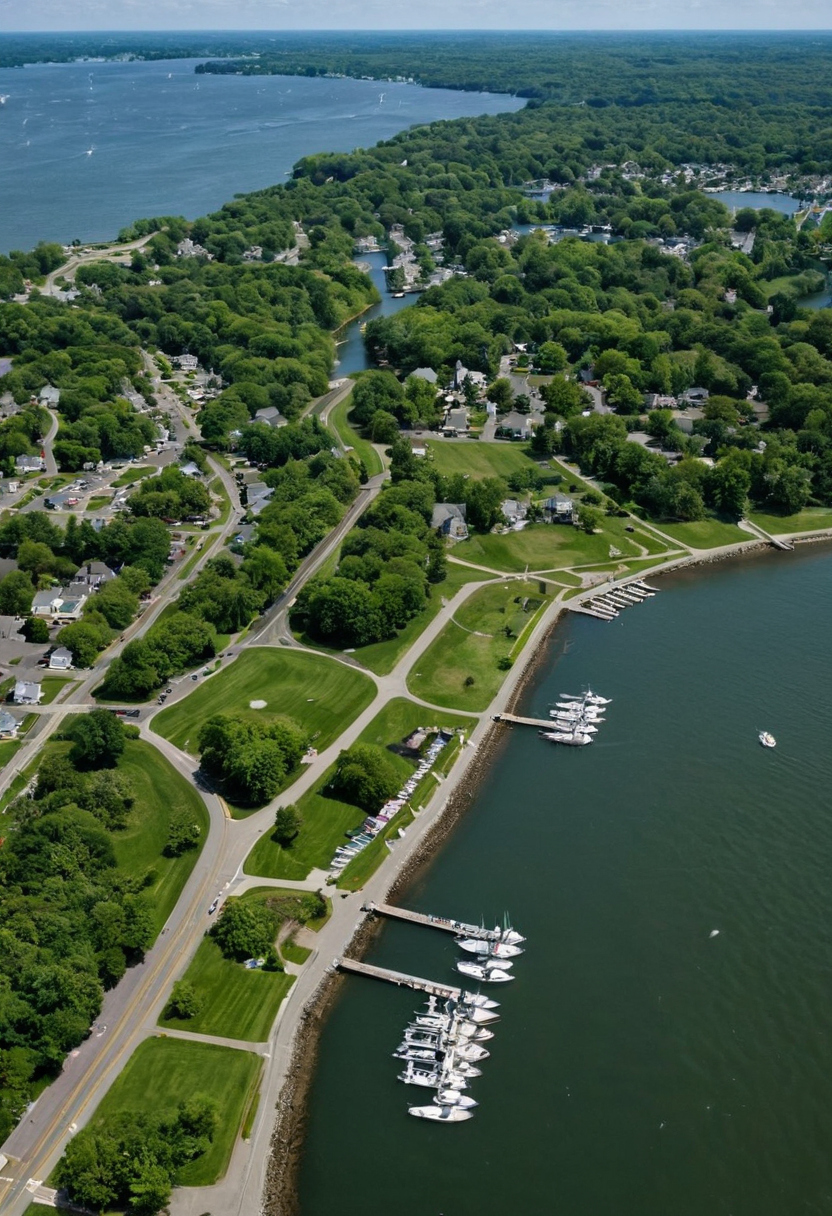
Where should Fairport Harbor visitors park, and what access limits should they expect shown as an editorial planning reference.
Lake Erie weather determines which Fairport Harbor waterfront activities remain practical
Fairport Harbor weather decisions require more than a general temperature icon. Shoreline wind, waves, lightning, visibility, heat, and cold affect beaches, piers, breakwaters, and lighthouse grounds differently.
The land forecast describes conditions near the destination, while the nearshore forecast adds lake conditions that can make a pleasant inland day uncomfortable or unsafe beside the water. Compare both with active alerts and official park notices. Seasonal averages cannot replace the forecast for the actual visit date.
Use clear triggers to go, modify, or stop
Treat weather as a set of operating signals rather than a prediction that must be perfect. An attraction or park operator’s posted closure controls even when a weather app appears less severe.
- Go: No relevant alerts are active, official facilities remain open, visibility is adequate, and conditions match the group’s clothing and mobility.
- Modify: Intermittent rain, uncomfortable heat or cold, increasing wind, fog, or rough water calls for a shorter shoreline walk, earlier lunch, or indoor-first schedule.
- Stop: Thunder, lightning, dangerous waves, flooding, an official closure, or another warning affecting the location means leaving the exposed area and entering a substantial building or enclosed vehicle.
Keep alerts enabled during the visit and recheck conditions before moving from the museum district to the waterfront. Confirm the date’s sunset and twilight times as well. Twilight is not a substitute for daylight on unfamiliar stairs, wet pavement, beach routes, or breakwaters.
Pack for shoreline exposure
Lake Erie exposure favors adjustable layers, a wind-resistant outer layer, rain protection, water, sun protection, and secure footwear with traction. Cold-season visitors should add insulated gloves and head covering. Warm-season visitors should carry drinking water and avoid relying on shade or concessions unless the operator confirms availability.
Leave umbrellas, canopies, flotation devices, and similar equipment in the vehicle until the selected park’s current rules are confirmed. Spray, sand, standing water, and wet leaves can change walking surfaces quickly.
If weather moves the outing indoors, verify museum hours before driving over. The Historical Society notes that physical exhibits rotate and may be temporarily removed during a season, so the indoor experience can change. The switch can also alter admission, parking, and meal costs.
A Fairport Harbor weekend budget must include admission, parking, meals, and contingency costs
A useful Fairport Harbor budget covers the entire outing, not just lighthouse admission.
Separate required costs from upgrades
| Budget line | Low-cost plan | Standard plan |
|---|---|---|
| Party | Two adults | Two adults and two children |
| Admission | Enter current age-based prices | Enter current adult and child prices |
| Parking | Confirmed fee and payment method | Confirmed fee plus fallback-lot allowance |
| Meals | Picnic or counter service | Restaurant meal, tax, and tip |
| Contingency | Small weather or snack reserve | Backup attraction or added transportation |
| Optional | None | Souvenirs, rentals, or upgrades |
Record the date each price was checked. Confirm reservation, processing, tour, and cancellation charges before paying. Verify picnic rules rather than assuming outside food is allowed.
Protect the attraction hours at lunch
- Check kitchen hours, not only the restaurant’s closing time.
- Confirm weekend reservations and group-size policies.
- Allow for preparation time before relying on takeout.
- Keep a second food option available during the same meal window.
If weather, parking, or a closure changes the spending plan, replace that segment instead of abandoning the day.

A Fairport Harbor weekend budget must include admission, parking, meals, and contingency costs shown with practical context cues.
A Fairport Harbor Plan B should replace the failed segment rather than cancel the entire day
A useful backup route preserves the meal, travel time, and at least one local experience when rain, wind, full parking, or an unexpected closure disrupts Plan A. The substitute must be open that day, reachable before final admission, suitable for the group, and less exposed to the problem that caused the switch.
Move indoors for rain or high wind
Ordinary rain may permit a sheltered stop, but a pavilion or covered walkway is not a fully indoor attraction. High wind, lightning, flooding, or a power outage should remove exposed waterfront stops from the schedule.
Select one indoor alternative before departure. Confirm its weekend hours, final admission, fees, reservations, parking, accessibility, and severe-weather policy through the operator. Pair the alternative with a meal option whose kitchen hours fit the revised schedule.
Leave when lawful parking is unavailable
A full lot is not permission to stop on a shoulder, block an access aisle, or use private property. Follow posted signs and official overflow directions. If no lawful space and safe pedestrian route are available, leave for the prechecked substitute instead of circling.
Use a closure decision tree
- Check the attraction or park operator first, followed by municipal alerts and applicable weather notices.
- If only one stop is closed, keep the meal and replace that segment.
- If conditions affect the entire waterfront, switch to the verified indoor option.
- If accessibility, restrooms, or travel time no longer suit the group, shorten the outing rather than forcing the schedule.
Set the transfer cutoff by subtracting driving time, parking time, and an arrival buffer from the substitute’s final-admission time. Once that cutoff passes, keep the meal and choose a shorter stop.
Fairport Harbor weekend planning FAQ
Is the Fairport Harbor lighthouse open this weekend?
Verify same-day hours, final admission, event notices, and tower access through the Fairport Harbor Historical Society website or its published contact details. Do not assume that museum and tower access follow the same schedule.
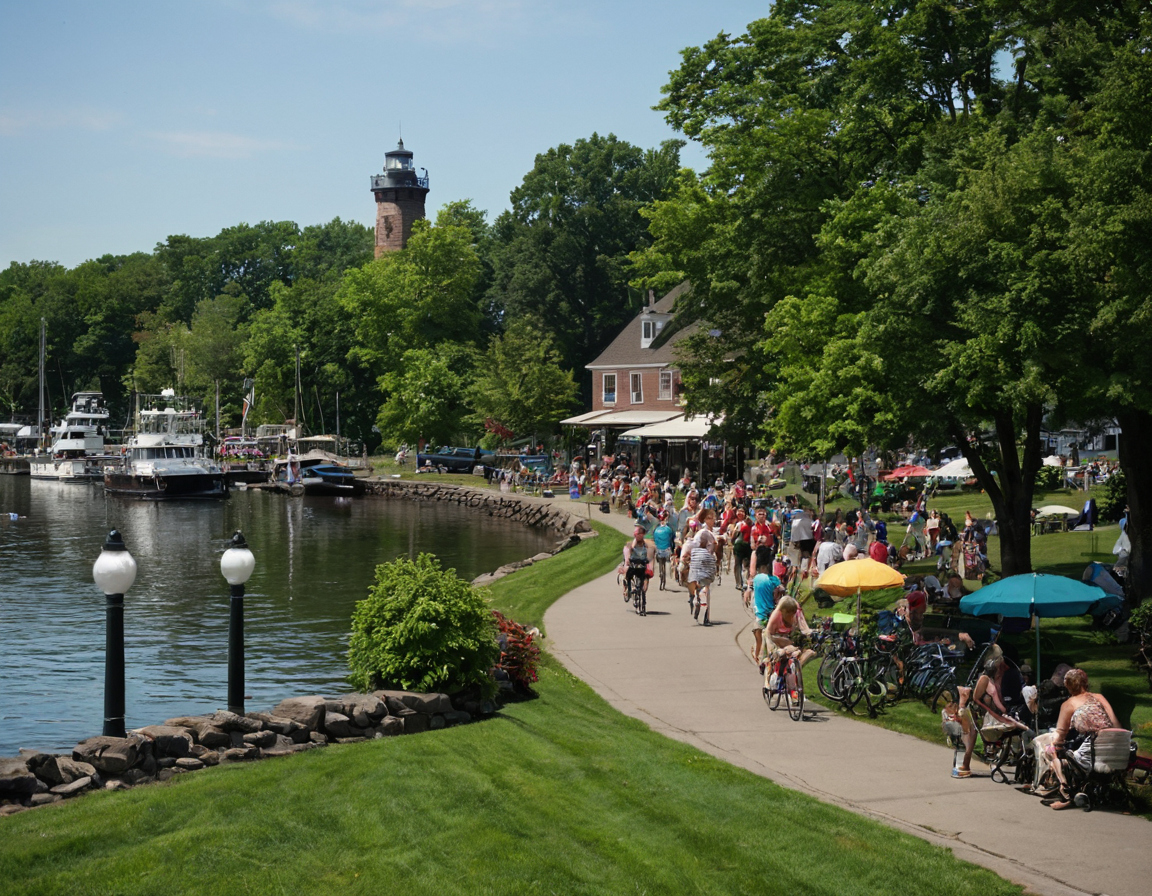
Fairport Harbor weekend planning FAQ shown with practical context cues.
How early should visitors arrive for waterfront parking?
For a fixed-hour attraction, plan to reach the destination 15 to 30 minutes before the verified opening or reservation time. Add more time when an event, unfamiliar lot entrance, mobility need, or longer pedestrian route could delay check-in.
What can families do if rain or high winds close outdoor attractions?
Move the verified indoor alternative into the fixed morning block, keep the planned meal, and reassess outdoor conditions afterward. A covered outdoor structure is not a suitable substitute during lightning, dangerous wind, or flooding.
How much should two adults or a family of four budget?
There is no reliable fixed total without current admission, parking, and menu prices. Build a dated worksheet for the actual party, then add taxes, tips, reservation charges, transportation, and a contingency amount for a replacement attraction.
Which parts of the itinerary are accessible to visitors with limited mobility?
Confirm parking, curb cuts, walking surfaces, entrances, seating, restrooms, beach routes, and tower access separately with each operator. The lighthouse tower’s 69-step spiral staircase makes tower access a different question from entry to the first-floor museum.
A departure-ready Fairport Harbor plan follows four actions: verify the changing details, anchor the fixed-hour stop, monitor waterfront conditions, and switch to the prepared alternative when necessary.