
italian rugs deserve better care than they usually receive in residential interiors. The standard approach is decorative first and maintenance later. Museum conservation works in the opposite direction. It assumes that light, dust, handling, and rotation are design issues from the start. That is the more useful model for serious homes as well.
The V&A’s display of the Ardabil Carpet is the clearest example. The museum notes that the carpet is lit for only 10 minutes on the hour and half hour in order to preserve its colour. That decision is not ceremonial. It is a direct response to what light does to dyed fibers over time. Source: V&A, The Ardabil Carpet.
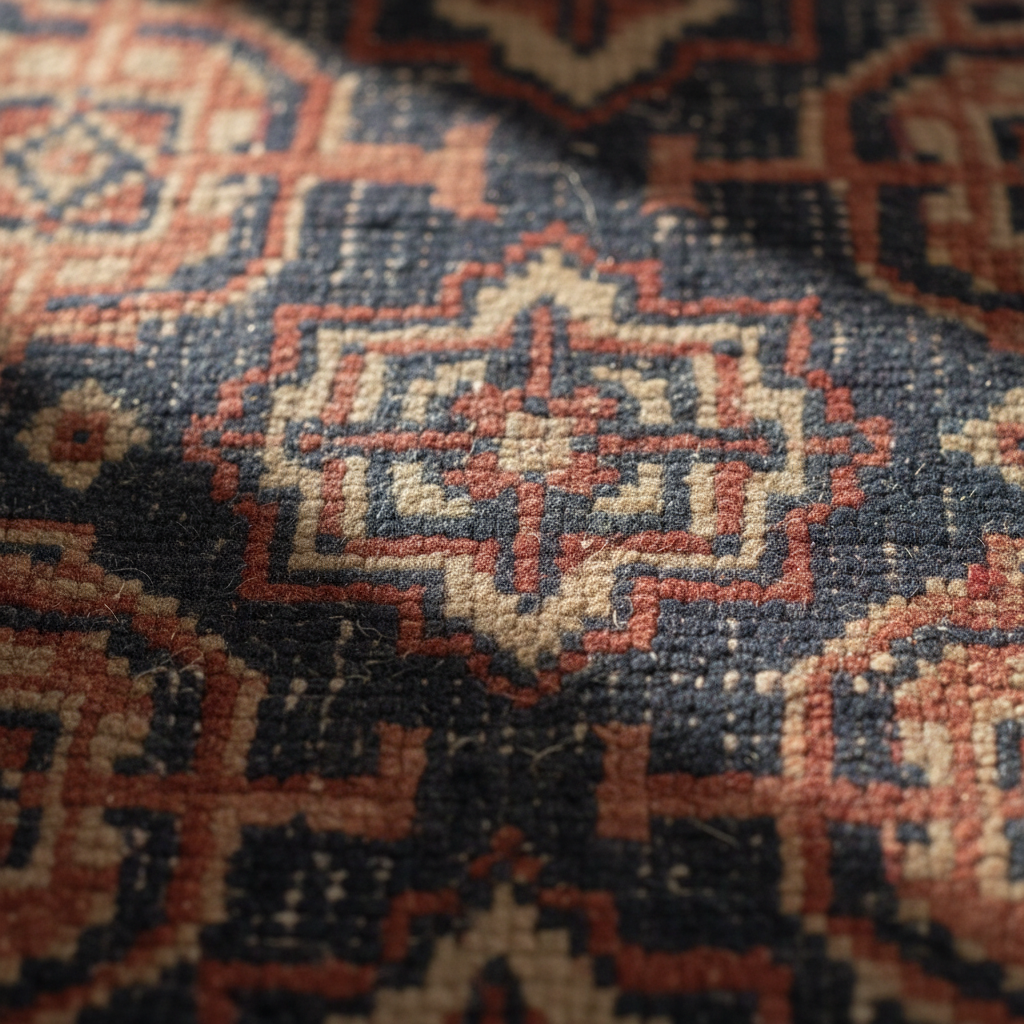
The same logic appears in the V&A’s conservation work on the Bullerswood Carpet. The museum discusses dust removal, controlled treatment, and periodic rotation. This matters because many premium interiors still place rugs in strong light paths and then act surprised when fading becomes uneven. Rotation is not a museum eccentricity. It is a straightforward way to spread exposure more evenly across the surface. Source: V&A, The conservation of the Bullerswood Carpet.
Wool remains central here because it combines comfort with real physical performance. Woolmark notes that wool is naturally breathable and can absorb moisture while remaining comfortable to the touch. In a room used daily, that helps the floor feel less brittle and more stable under changing indoor conditions. Source: Woolmark, Wool is naturally breathable.
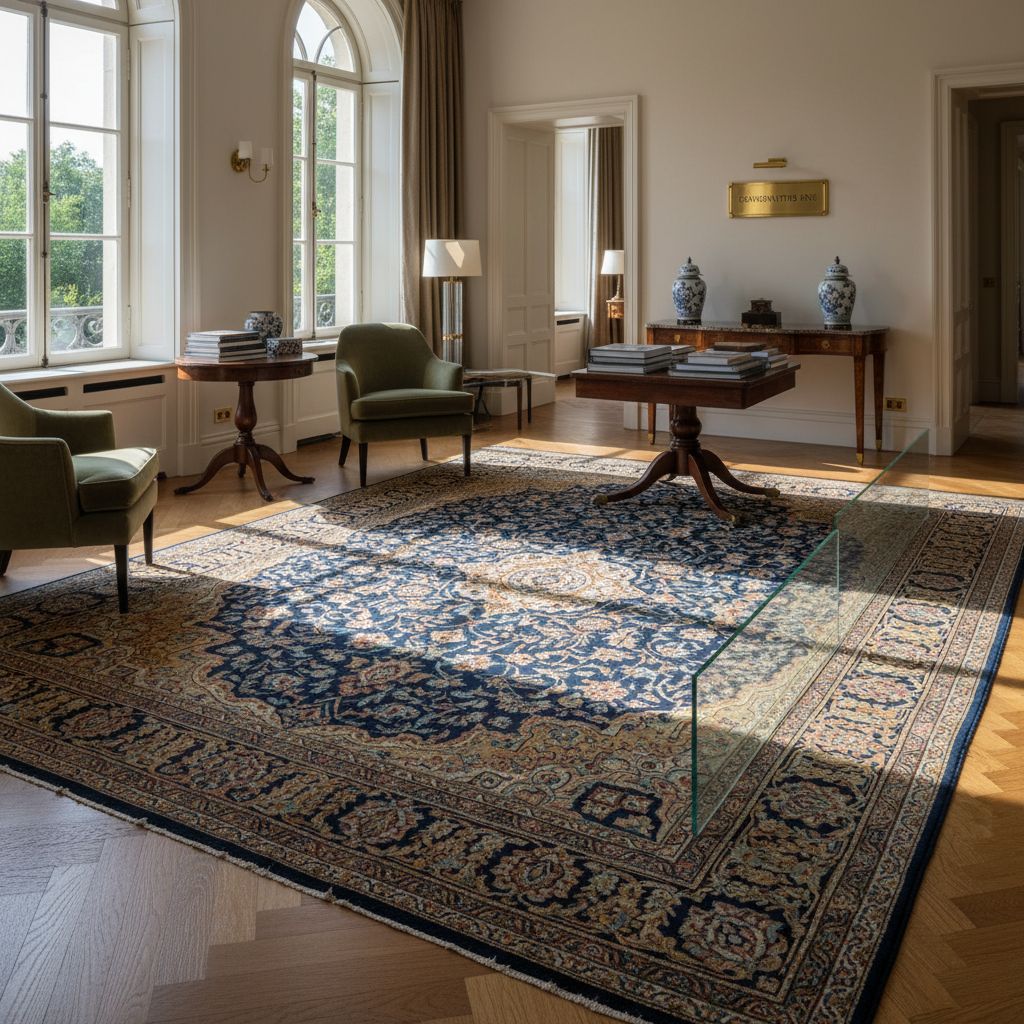
The EPA’s indoor-air research adds another practical layer. If people spend about 90 percent of their time indoors, then the floor surface is not a decorative detail. It is part of the room’s daily environmental load. Dust management and cleaning schedule are therefore integral to specification. Source: EPA indoor air research.
For a homeowner, the translation is simple. Keep direct light under control. Rotate the rug in rooms with pronounced daylight. Vacuum consistently and gently rather than aggressively and rarely. Treat large rugs as fixed interior architecture with care cycles, not as disposable soft goods. That is how museum logic becomes a better residential standard.
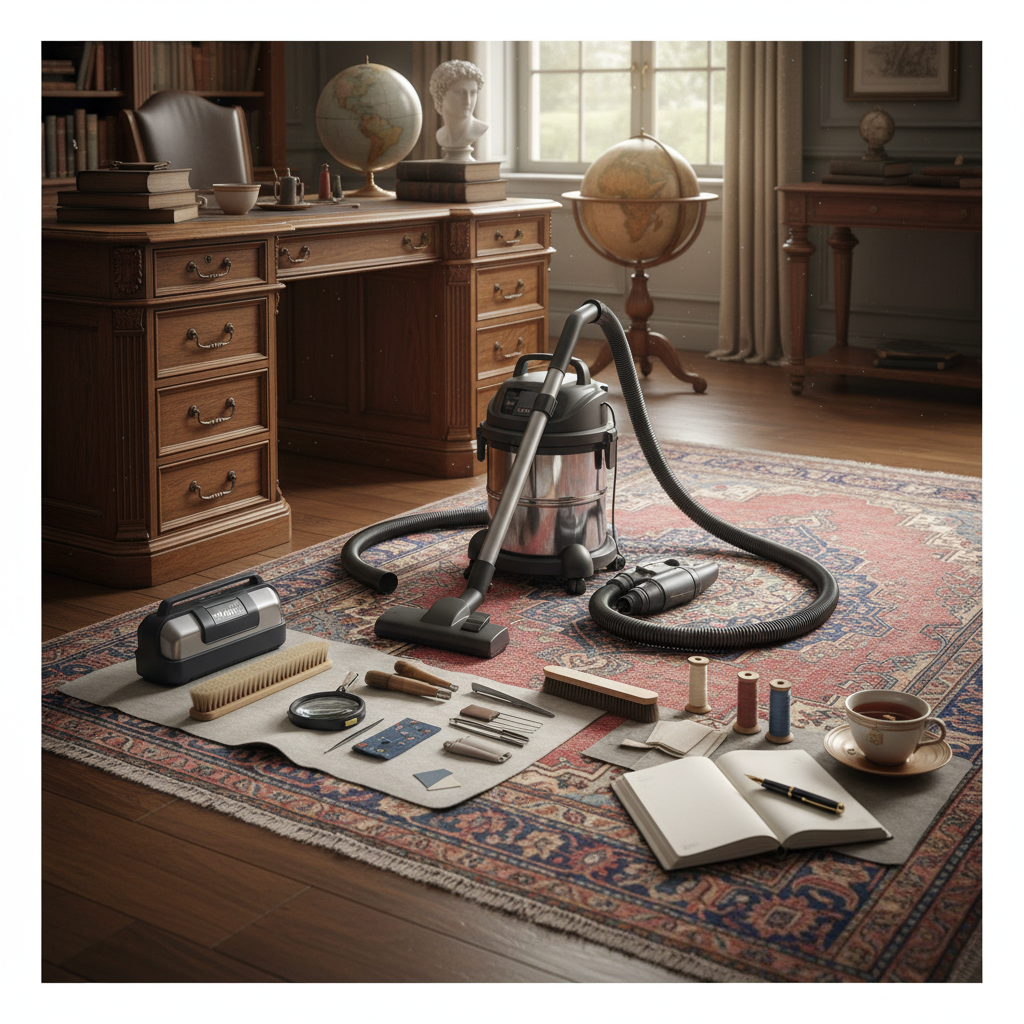
The luxury result is not only preservation. It is steadier color, quieter wear patterns, and a room that matures evenly instead of breaking down in visible patches.